Adding a new structure to your property is an exciting project. Whether you are protecting your classic car from the sun or creating a covered space for your RV, a carport is a smart, cost-effective investment. However, before you start building, one critical question usually comes up: “Do I need a permit for a carport?”
For most homeowners, the answer is yes. While a carport is an open structure and might seem less complex than a garage, most local municipalities still classify it as a permanent addition.
Skipping the permit process can lead to fines, insurance issues, or even being forced to take your new structure down. In this guide, we will walk you through what you need to know to ensure your project is legal and stress-free.
Why Are Permits Required?
Building codes exist to ensure safety. Even though a carport is open, it must be able to withstand specific environmental stresses.
- Wind and Snow Loads: Your local government wants to ensure the structure won’t collapse during a heavy storm.
- Zoning and Setbacks: Permits verify that you aren’t building too close to your property line, utility easements, or your neighbor’s fence.
- Aesthetics and HOA Rules: In some areas, there are regulations to keep neighborhoods looking consistent.
If you are looking for a structure that meets high durability standards, our Metal Carports are engineered to comply with rigorous building codes.
When You Might NOT Need a Permit
While most projects require approval, there are some exceptions depending on where you live.
- Small Size: Some rural areas or counties may not require a permit for structures under a certain square footage (often 120 to 200 sq. ft.), though this is rare for a functional vehicle shelter.
- Temporary Structures: If you are putting up a temporary fabric canopy, you might be exempt. However, these do not offer the long-term protection of a steel structure.
- Agricultural Use: In certain rural zones, structures designated for farming equipment may have different rules.
Always double-check with your local planning department. Never assume your project is exempt without official confirmation.
Steps to Obtain a Permit
Getting a permit doesn’t have to be a nightmare. Here is a simple roadmap to follow:
- Visit Your Local Planning Office: Bring a simple site plan showing where you want to build. Ask them directly, “Do I need a permit for a carport of this size?”
- Submit Your Plans: You will typically need engineering drawings that show the dimensions, materials, and anchoring system.
- Wait for Approval: Review times vary, but once approved, you can begin construction.
- Final Inspection: Once built, an inspector will sign off on the work, giving you peace of mind.
At Quality Metal Carports, Inc., we can provide the generic engineering plans you often need to submit your application.
Do I Need a Permit for a Carport in an HOA?
If you live in a community with a Homeowners Association (HOA), you have an extra layer of approval. Even if the city gives you a permit, your HOA might still say no.
- Check Your CC&Rs: Read your community guidelines regarding detached structures.
- Submit a Request: You will likely need to show them the design and color scheme.
- Match Your Home: HOAs often require the carport to match the aesthetic of your main house.
For homeowners with recreational vehicles, our RV Carports can be customized to blend seamlessly with your property while offering superior protection.
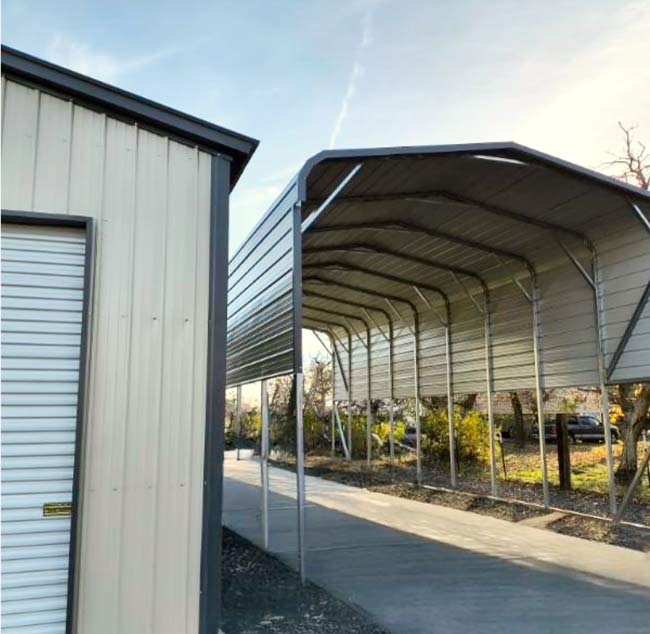
Why Choose Quality Metal Carports, Inc.?
Navigating permits and building codes is easier when you have a partner who understands the industry. At Quality Metal Carports, Inc., we manufacture our own components to ensure every structure is built to last.
We are a family-owned business based in Fresno, serving the entire state of California. From the moment you ask for a quote to the final installation, we are committed to honesty, respect, and quality.
We provide the durable, code-compliant structures you need, whether it’s a simple car shelter or a large agricultural barn.
Frequently Asked Questions (FAQs)
How much does a building permit cost?
Permit fees vary widely by location and the value of the project. You can generally expect to pay anywhere from $50 to several hundred dollars. It is best to check your city’s fee schedule online.
Can I get a permit after I have already built the carport?
Yes, this is called a “retroactive permit.” However, it is risky. If the structure doesn’t meet code, you may have to rebuild it or tear it down, and you will likely pay double fees as a penalty.
Do metal carports require different permits than wood ones?
The permit type is usually the same, but the documentation is different. Metal structures often require specific engineering ratings for wind and snow loads, which manufacturers can usually provide.
How long does it take to get a permit approved?
Simple over-the-counter permits can be issued the same day. However, if your project requires a full plan review, it could take anywhere from two weeks to six weeks depending on your local office’s workload.
What is a "setback" and how does it affect my carport?
A setback is the mandatory distance between your structure and the property line. For example, you may need to keep your carport at least 5 feet away from your neighbor’s fence. You can find detailed definitions of setbacks and other zoning terms on resources like Investopedia’s real estate dictionary.